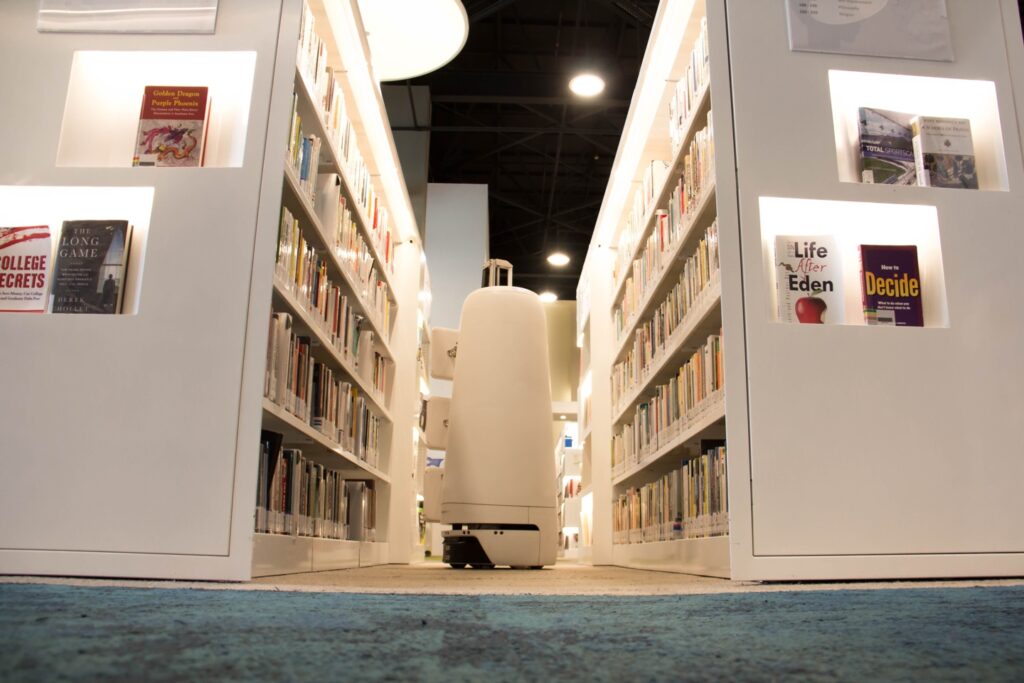
This prominent university library aimed to digitize its extensive collection to enhance accessibility and preservation.
Their traditional methods of scanning and managing books were unable to keep up with modern patron requirements.
New digital methods to scan and track books that match modern patron expectations.


.png)
We conducted multiple workshops with the university’s library team to understand their digitization goals.
Their primary need was a solution that could scan thousands of books quickly and integrate metadata directly into Koha.
They also emphasized the importance of handling delicate materials with care and minimizing manual input.
Once their objectives were clear, we began designing a solution that would automate and streamline their entire book digitization workflow.
To ensure high-speed and high-quality scanning, we implemented an advanced book scanning system capable of handling both flat and bound volumes.
The scanner was equipped with auto-flattening, page detection, and glare removal technologies.
Each scan was processed through an OCR engine to extract and structure the text.
This automated pipeline reduced human error and enabled instant indexing of content into the library’s database.
Our engineers built a custom API bridge between the scanning system and Koha.
This allowed bibliographic data, tags, and access levels to be auto-populated and synced in real time.
We also customized Koha’s interface to display scanned previews, making digital resources easier to discover and access.
Librarians could now manage both physical and digital assets in a unified dashboard.
An admin panel was developed to monitor scanning throughput, usage patterns, and material availability.
Access logs provided insights into which scanned materials were most frequently used.
We also implemented scheduled maintenance alerts and automated backups for long-term archival stability.
These enhancements helped the library improve digital service delivery while safeguarding rare documents.