Discover student orientation insights, tips, and strategies from experts
Guide to effective student orientations
Download the eBook
-cropped.svg)


.svg)
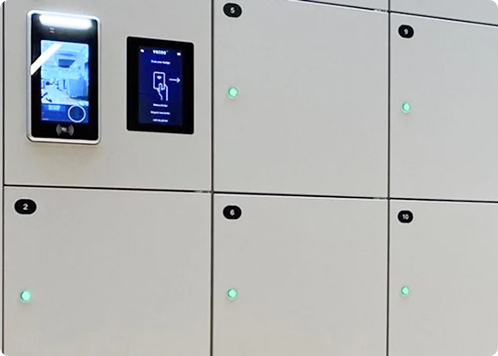
Every school and university eventually hits the same wall: manual attendance doesn't scale, and the wrong automated system creates more problems than it solves. Two technologies dominate the conversation — facial recognition and RFID (radio-frequency identification). Both promise faster attendance and tighter campus access control, but they solve the problem in very different ways, with different costs, risks, and rollout timelines.
If you're a principal, school operations lead, or higher ed IT director evaluating an attendance and access upgrade, here's a practical, side-by-side comparison to help you choose the right fit for your campus.
RFID attendance relies on a physical credential — a card, fob, or wristband embedded with a chip. Students and staff tap or swipe the credential near a reader, which logs the timestamp and identity to your system. It's the same underlying technology used in transit cards, office badges, and hotel key cards.
Facial recognition attendance uses cameras and computer vision to identify a person by their facial features, matching them against a pre-enrolled database. There's no card to carry — the system recognizes the person as they walk into a classroom, gate, or building entrance.
The core difference is simple: RFID authenticates a credential. Facial recognition authenticates a person. That distinction drives almost every trade-off below.
RFID is mechanically simple and extremely reliable at the task it performs: if the tag is present and the reader works, the tap registers. Its main failure mode is human, not technical — students forget cards, share them, or tap in for a friend who's running late. This is often called "buddy punching," and it's the single biggest integrity gap in card-based attendance.
Facial recognition eliminates buddy punching almost entirely, since it verifies the actual person rather than an object they're carrying. Modern systems using deep-learning models report accuracy in the high 90th percentile under good lighting and camera placement. But accuracy drops in poor lighting, with masks or heavy occlusion, or with outdated camera hardware — and vendors don't always meet their contractual accuracy claims once deployed at scale, so real-world piloting matters more than spec sheets.
For high-traffic moments — a university lecture hall filling up in five minutes, or a school's morning rush — speed matters. RFID taps are fast and predictable, roughly one to two seconds per person, but they create a bottleneck at single-reader entry points and require everyone to physically interact with the reader.
Facial recognition can process attendance passively, as students walk past a camera without stopping. For large lecture halls or multi-entrance buildings, this contactless, queue-free flow is a meaningful upgrade — students simply enter, and attendance logs itself in the background.
RFID is the more budget-predictable option. Readers are inexpensive, cards cost cents to a few dollars each, and the technology has been commoditized for two decades. The ongoing cost is mostly replacement cards for loss or damage.
Facial recognition requires a heavier upfront investment: high-resolution cameras, edge-processing or cloud compute, and integration with a facial database and matching engine. Total cost of ownership is typically higher, especially at scale across multiple buildings, though the elimination of physical cards removes a recurring cost line over time.
This is where the two technologies diverge most sharply — and where school leaders face the highest scrutiny.
RFID cards don't store biometric data. A lost card is an inconvenience, not a permanent identity risk, and privacy conversations with parents are relatively straightforward.
Facial recognition involves collecting and storing biometric data on minors, which puts it under a much stricter compliance microscope. Regulatory treatment varies widely by jurisdiction and is actively shifting: some U.S. states have restricted or paused facial recognition in K-12 schools pending further review, while other regions and school systems are actively rolling it out for attendance and exam eligibility. In the UK, schools using biometric technology are required to obtain written parental consent and must offer a non-biometric alternative for any student or parent who objects. Given how quickly this landscape is moving, treat any facial recognition rollout as a compliance project first and a technology project second — confirm your state, provincial, or national rules, and your accreditation body's stance, before signing a vendor contract.
For higher ed, adult students generally have more legal latitude to consent directly, which is one reason facial recognition adoption has moved faster in university settings than in K-12.
If your goal extends past attendance into building and gate access control, the comparison shifts again. RFID access control is mature, well-understood, and easy to integrate with existing door hardware — but a stolen or cloned card grants the same access as the real cardholder.
Facial recognition offers a stronger security guarantee for contactless access: you can't lend your face to someone else, and lost credentials aren't a factor. For campuses managing visitor access, restricted labs, or dormitory entry, this is a genuine security upgrade — provided the system is paired with proper liveness detection to prevent spoofing via photos or video.
There's no universal winner — the right choice depends on your priorities:
RFID remains the lower-risk, lower-cost, faster-to-deploy option, and it's still the right call for many K-12 environments, especially where parental consent and biometric privacy are sensitive topics. Facial recognition delivers a genuinely better experience at scale and a stronger security posture, but it comes with real compliance obligations, ongoing accuracy considerations, and a materially higher cost of ownership.
Before committing either way, pilot the system in one building or one grade level, involve your legal and compliance team early, and read the vendor's accuracy data with a healthy dose of skepticism — ask for third-party validation, not just marketing claims. The right system isn't the most advanced one; it's the one your campus can operate reliably, afford to maintain, and defend to parents, students, and regulators alike.
I'm a highly skilled project manager with extensive experience in the education technology industry. With a background in computer science and a passion for improving educational outcomes, I have dedicated my career to developing innovative software solutions that make learning more engaging, accessible, and effective.