Discover student orientation insights, tips, and strategies from experts
Guide to effective student orientations
Download the eBook
-cropped.svg)


.svg)
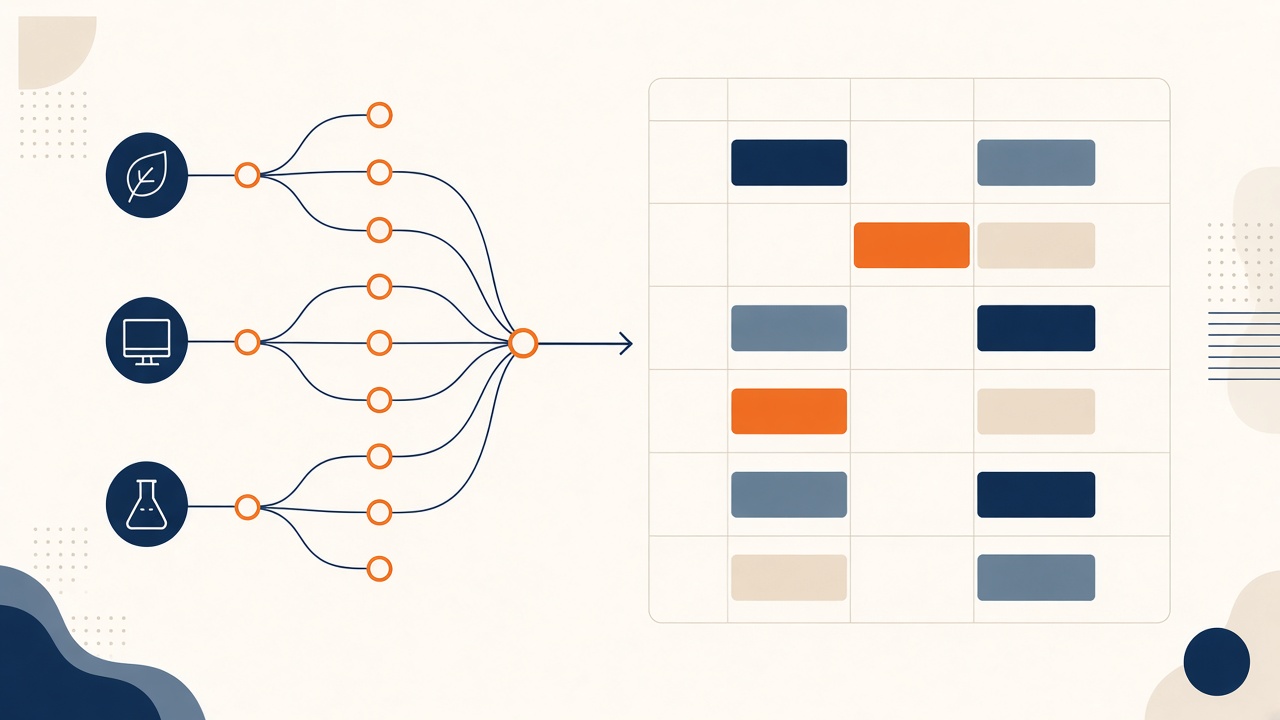
Fixed class groups are hard enough. Electives make scheduling multiplicative. Each student combination creates a new constraint set. A clash is no longer "Class A vs Class B." It is "these 30 students all chose the same two modules."
This guide is for university registrars, programme coordinators, and planners who need timetable software that respects student choice without endless manual rebuilds.
Two electives with overlapping demand can force many students into impossible grids if periods collide.
Popular labs and studios become bottlenecks. Capacity errors hurt fast.
Add/drop windows move demand after the first draft. Static spreadsheets cannot keep up.
K-12 schools with option subjects face a lighter version of the same problem. Universities feel the full weight. Differences in broader ERP needs are outlined in K-12 School ERP vs Higher Ed University Management System.
Without enrolment-aware modelling, you only schedule empty shells.
Elective clashes need the same hard/soft split as any timetable, with more student-level checks. The engine should propose period moves that clear the largest student conflict set first. See Algorithmic Conflict Resolution.
Track which electives over-subscribe rooms every term. Use utilization reports to justify more sections or different rooms. Practical angle: Optimizing Campus Classroom & Lab Space Utilization.
Students drop courses. Staff fall ill. Elective grids need substitute and swap tools that do not ignore enrolment sets. See Teacher Substitutions & Last-Minute Absence.
Manual sheets can schedule a few option blocks. They rarely survive multi-programme electives with shared staff. Time and error patterns are covered in Manual Excel Timetables vs Automated Timetabling Software.
Elective scheduling works best when registration, rooms, and staff data share one campus record. Broader context: School Management Software: The Definitive 2026 Guide and GR Tech's campus management system.
Student choice turns timetabling into a constraint problem at student level. Software that only places class boxes will not survive elective season.
For the full timetable toolkit, read The Complete Guide to Automated Timetable Management Software.
I’m Ahmad Ahsan, founder and CEO of GR Tech. Since starting the company in 2010, I’ve been focused on helping schools and businesses get access to high quality, scalable software without the usual complexity or cost barriers. I’m especially passionate about innovation in education, whether it’s building AI powered tools for libraries or creating smarter systems that make life easier for students and staff.
At the end of the day I believe technology should feel simple, practical and genuinely useful.