Discover student orientation insights, tips, and strategies from experts
Guide to effective student orientations
Download the eBook
-cropped.svg)


.svg)

A timetable clash is simple to describe and hard to fix. Two classes need the same teacher. Two groups need the same lab. A hard constraint and a soft preference pull in opposite directions.
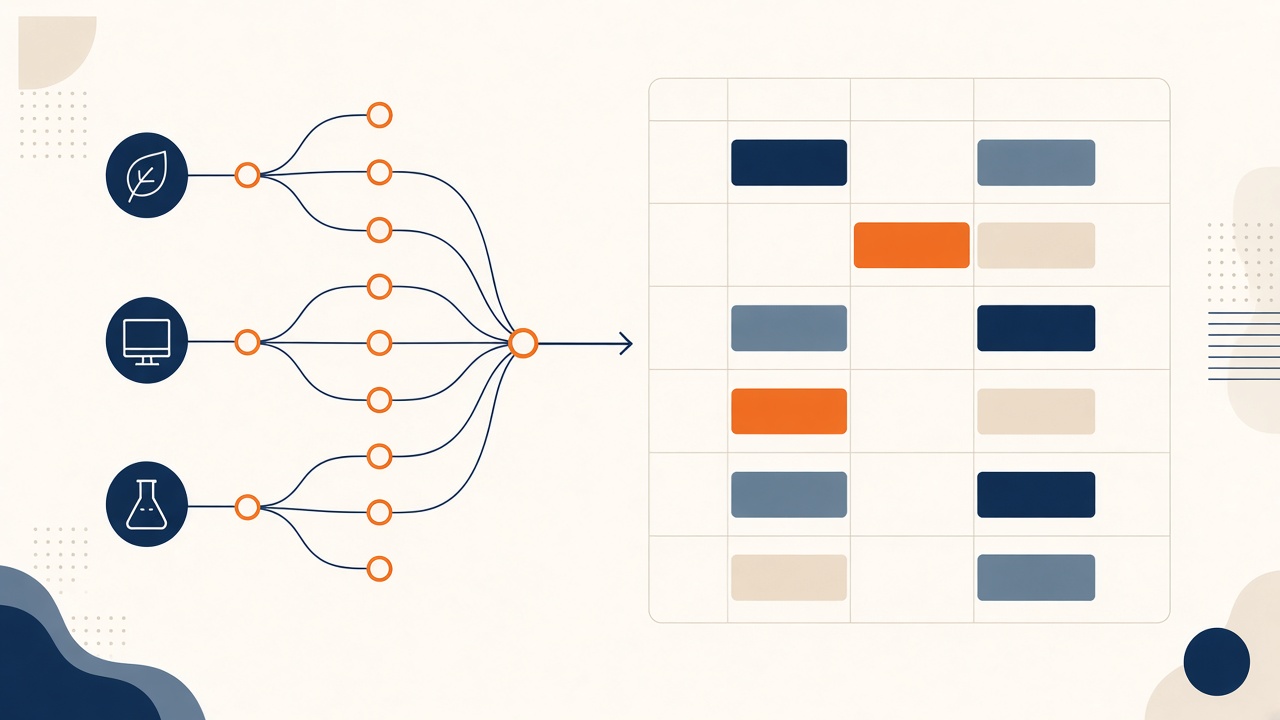
Algorithmic conflict resolution is how modern timetable software searches for a workable schedule instead of leaving one coordinator to reshuffle cells at midnight.
This guide is for academic planners who want to understand what "AI scheduling" actually does in plain language.
These must not publish:
These are undesirable but sometimes allowed:
Good software treats these differently. Hard conflicts block publish. Soft conflicts get scored and traded.
"AI" here usually means search and optimization, not a chatbot inventing your curriculum.
Humans are good at local fixes. They are weak at seeing three moves ahead across a full week. Algorithms can test many combinations quickly and keep the whole model consistent.
That is the main time win over Excel rebuilds. Background: Manual Excel Timetables vs Automated Timetabling Software.
Software cannot invent school policy. You must set:
Bad rules produce a "valid" timetable nobody likes. Clear rules produce options you can defend.
Algorithmic planning builds the term grid. Daily absence needs a faster workflow for substitutes and swaps. That is covered in Teacher Substitutions & Last-Minute Absence.
Many clashes are really space problems. If labs are scarce, the solver needs accurate capacity and equipment tags. See Optimizing Campus Classroom & Lab Space Utilization.
When students choose courses, the model must respect group combinations, not only class labels. Universities feel this most. Details in Elective Course Scheduling & Student Choice.
Ask them to:
If they only show a pretty calendar with no conflict story, keep looking.
Algorithmic conflict resolution is a search for a schedule that respects your hard rules and balances your soft ones. It saves time when the puzzle is bigger than one spreadsheet can hold.
For the full timetable feature picture, start with The Complete Guide to Automated Timetable Management Software.
I'm a highly skilled Project Manager with extensive experience in the education technology industry. With a background in computer science and a passion for improving educational outcomes, I have dedicated my career to developing innovative software solutions that make learning more engaging, accessible, and effective.