Discover student orientation insights, tips, and strategies from experts
Guide to effective student orientations
Download the eBook
-cropped.svg)


.svg)
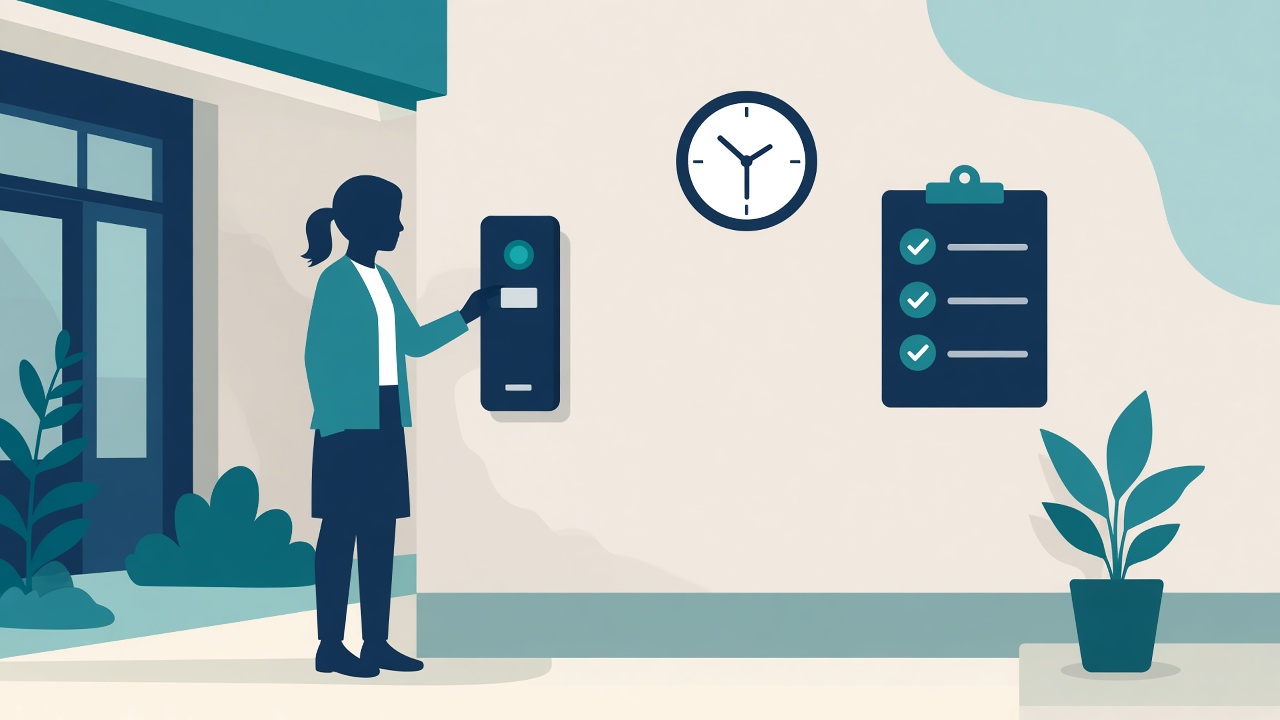
Teachers and staff still waste a lot of time on attendance. Someone forgets to sign in. Someone else clocks in for a friend. The front office has to fix payroll later. That work adds up.
Facial recognition can record who showed up by checking a person's face at a door or check-in point. It does not rely on a card or a PIN that someone else can use.
This guide is for school leaders and HR teams who want a clearer attendance record without more paperwork.
Most campuses still use one of these:
Each method creates extra work. HR has to match timesheets. Payroll has to fix mistakes. Staff argue about hours when the record is unclear.
A face check ties the stamp to the right person. That is the main reason schools look at this option.
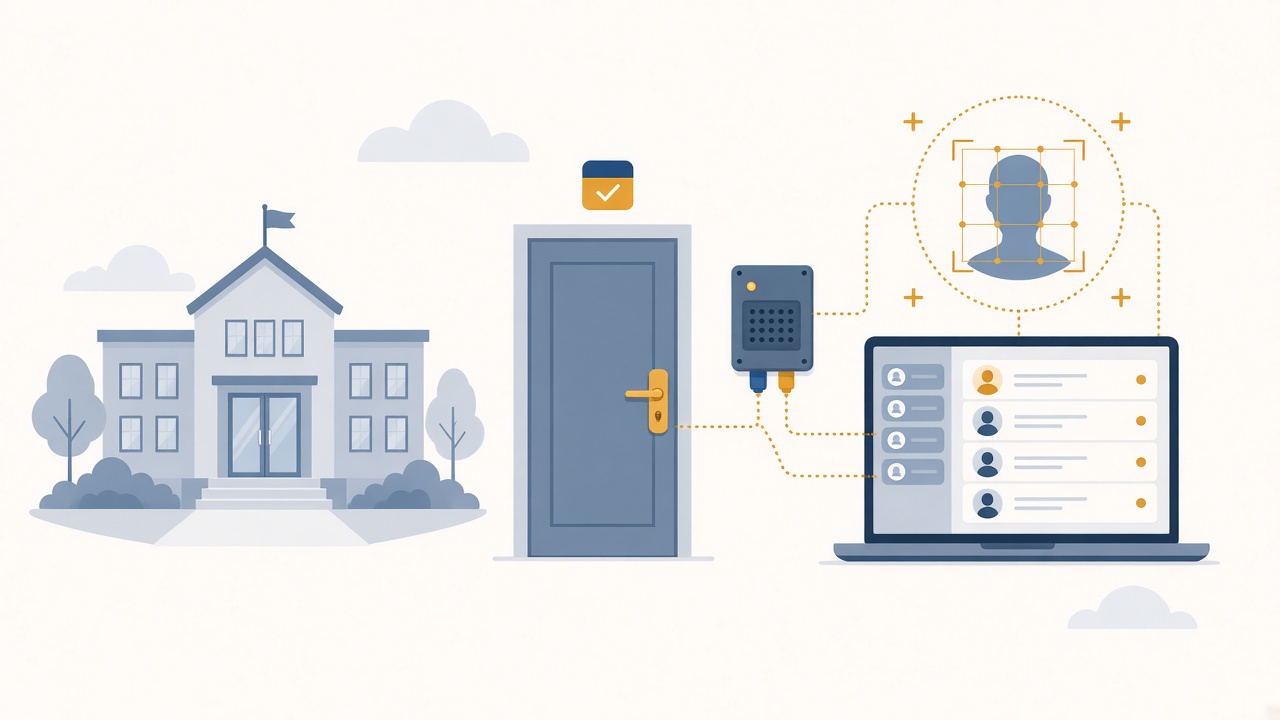
A camera or terminal sits at a staff entrance, office door, or shared check-in spot. When an enrolled employee walks up, the system matches their face and logs the time.
That log can sync to the school's HR or payroll system. Rules you already use still apply, like overtime limits or leave days.
Because the system checks the person, buddy punching gets much harder. Staff also spend less time fixing missing clock-ins at the end of the week.
When check-in data feeds straight into HR tools, office staff spend less time typing from paper sheets or fixing badge gaps.
A clear time stamp linked to a verified person makes hour debates easier to settle. You have a record you can review.
Some teachers work in more than one building. With shared enrollment, the same person can check in at different sites and still land in the right record.
Adults need a clear reason for the change. Explain what data you store, how long you keep it, and who can see it. Offer a backup method for people who cannot use face check-in for a valid reason.
Staff biometrics are sensitive. Put purpose limits in writing. Keep templates secure. Set a delete schedule when someone leaves. For a fuller privacy checklist aimed at student data (many of the same habits apply), see Student Privacy & Data Security in Campus Facial Recognition.
Face check-in helps most when it talks to payroll and HR software you already trust. Ask vendors how attendance events move between systems and what happens if the network drops.
Student attendance and staff attendance share the same idea, but the goals differ. Student systems often focus on class time and safety. Staff systems focus on hours, pay, and coverage.
If you already compared face attendance and RFID for classrooms, that background still helps. Start with Facial Recognition Attendance vs RFID and 5 Benefits of Using Facial Recognition for Student Attendance in K-12, then apply the same care to adult workflows.
You do not need a campus-wide launch on day one.
Do not enroll everyone before you test lighting. Bad camera placement creates false rejects and angry staff.
Do not hide the policy in a long handbook. Send a one-page note that answers three questions: what is stored, who can see it, and how to opt into a backup method.
Do not skip payroll testing. Run parallel checks for at least one full pay period so mistakes stay small.
Staff face attendance is useful when paper and badges keep creating payroll cleanup. The tech is only half the job. Clear policy, honest communication, and a clean link to HR tools matter just as much.
If you want to see how face systems fit a wider campus setup, start with GR Tech's facial recognition overview and map it against your current timekeeping process.
I'm a highly skilled project manager with extensive experience in the education technology industry. With a background in computer science and a passion for improving educational outcomes, I have dedicated my career to developing innovative software solutions that make learning more engaging, accessible, and effective.