Discover student orientation insights, tips, and strategies from experts
Guide to effective student orientations
Download the eBook
-cropped.svg)


.svg)
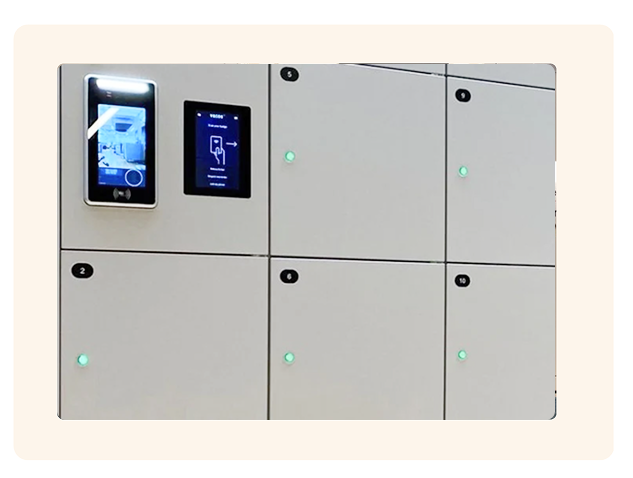
Facial recognition promises real benefits for campuses — faster check-ins, fewer lost ID cards, sharper access control at dorms and labs. But every one of those benefits comes attached to a fact that schools and universities can't treat casually: a student's face is biometric data, and biometric data belonging to minors and young adults is some of the most sensitive information an institution can hold. Get the compliance piece wrong, and a security upgrade quickly turns into a legal and reputational liability.
This guide walks through what "compliant" actually looks like in practice — not just which laws apply, but how to operationalize them so your facial recognition deployment holds up under scrutiny from regulators, parents, and your own board.
Traditional student records — grades, attendance, schedules — are covered by well-understood rules. Biometric identifiers are different for a few reasons:
Because of this, facial recognition sits at the intersection of several overlapping compliance regimes, and a program that satisfies one may still violate another.
Before writing a single policy line, identify which of these apply to your institution:
FERPA (Family Educational Rights and Privacy Act). If a faceprint is linked to a student's education record — which it almost always is once tied to an ID or attendance system — it's treated as personally identifiable information under FERPA. That means restrictions on disclosure, requirements around parental or eligible-student consent, and audit obligations for who accessed the data and why.
COPPA (Children's Online Privacy Protection Act). If your facial recognition system is a digital service that collects data from children under 13 — think tablet-based check-in kiosks — COPPA's parental consent and data-minimization requirements likely apply, layered on top of FERPA.
State biometric privacy statutes. A growing number of states have dedicated biometric laws — Illinois's BIPA, Texas's CUBI, and Washington's biometric statute among the most cited — that impose specific requirements: written notice before collection, defined consent procedures, mandatory retention and destruction schedules, and in some cases a private right of action for individuals to sue directly. Several states have also passed education-specific rules that restrict or outright pause facial recognition use in schools. Because this area shifts often, confirm the current status of state and local law before deployment rather than relying on older guidance.
State student privacy laws. Many states layer additional student-data-privacy statutes on top of FERPA, often with stricter vendor-contracting and data-sale prohibitions specific to K-12 and sometimes higher-ed contexts.
The practical takeaway: don't assume federal law is your ceiling. State and local rules are frequently the deciding factor, and they change faster than federal law does.
Define, in a document you'd be comfortable showing a regulator, exactly what the system is for — dorm access, cafeteria payment, attendance tracking — and commit to not using the data for anything else without a new consent process. Purpose creep is one of the most common triggers for legal exposure.
Generic "by attending this school you agree to our privacy policy" language is not adequate consent for biometric collection in most jurisdictions with dedicated biometric statutes. You need:
Collect only what the specific use case requires, and set a hard deletion schedule. A student who graduates or transfers should have their faceprint deleted within a defined window — not retained indefinitely because it's convenient. Most biometric statutes specify maximum retention periods; treat those as ceilings, not targets, and delete sooner when the data is no longer needed.
Because biometric data can't be reissued after a breach, the security bar should exceed what you'd apply to ordinary student records:
Most campuses aren't building facial recognition in-house — they're buying it. That makes vendor contracts a compliance document, not just a procurement one. Confirm contractually that the vendor:
Publish a plain-language explanation of the system for parents and students — what it does, what data it collects, how long it's kept, and who to contact with concerns. Pair this with an internal governance structure: a named data protection or privacy officer, a documented incident response plan specific to biometric breaches, and a periodic compliance review as laws in this space continue to evolve quickly.
Facial recognition compliance isn't a box to check once at rollout — it's an ongoing discipline. Laws in this space are moving quickly, vendor practices vary widely, and the reputational cost of getting it wrong with student data is disproportionately high compared to almost any other campus IT decision. Institutions that treat privacy compliance as a design constraint from day one — not an afterthought bolted on after a vendor demo — are the ones that end up building trust with students and parents instead of eroding it.
If your campus is evaluating or already running a facial recognition system, the next step is a formal privacy impact assessment: a structured review of exactly what data flows where, who touches it, and what happens if something goes wrong. That assessment, more than any single policy document, is what turns "we have a privacy policy" into "we have a defensible compliance program."
I'm a highly skilled project manager with extensive experience in the education technology industry. With a background in computer science and a passion for improving educational outcomes, I have dedicated my career to developing innovative software solutions that make learning more engaging, accessible, and effective.