Discover student orientation insights, tips, and strategies from experts
Guide to effective student orientations
Download the eBook
-cropped.svg)


.svg)

Campus security has traditionally operated in reactive mode: cameras record, incidents happen, and staff review footage afterward to understand what occurred. AI-powered facial recognition shifts a meaningful portion of that work from after-the-fact review to real-time detection — flagging a person of concern at the moment they enter a building, not twenty minutes later when someone finally pulls the footage. For campus security directors and university administrators, that shift from reactive to proactive security is the real story behind this technology, well beyond its more commonly discussed use as a card replacement.
This article is part of our Facial Recognition System pillar, under the Campus Security & Biometrics cluster, and it's written for campus security directors and university administrators evaluating how AI-powered facial recognition fits into a broader, layered campus security strategy — not as a standalone product, but as one component of a coordinated system.
The core shift AI brings to facial recognition isn't the recognition itself — that technology has existed for years — it's the ability to act on a match in real time, at scale, across an entire campus network of cameras simultaneously, without requiring a human to be watching every feed. This changes what campus security teams can realistically monitor:
None of this requires additional staffing to monitor every camera feed manually—the AI layer does the continuous monitoring, and human security staff are brought in only when a defined condition is met.
Facial recognition delivers the most value to campus security not as a standalone system, but as one layer within a broader security ecosystem that includes access control, video management, mass notification, and emergency response protocols. A few integration points matter most:
When facial recognition operates as a metadata layer within the campus VMS rather than a separate appliance, security staff can search video by identity rather than manually scrubbing footage—dramatically reducing investigation time for both routine and serious incidents. This also allows facial recognition alerts to appear directly within the same monitoring interface security staff already use, rather than requiring a separate dashboard.
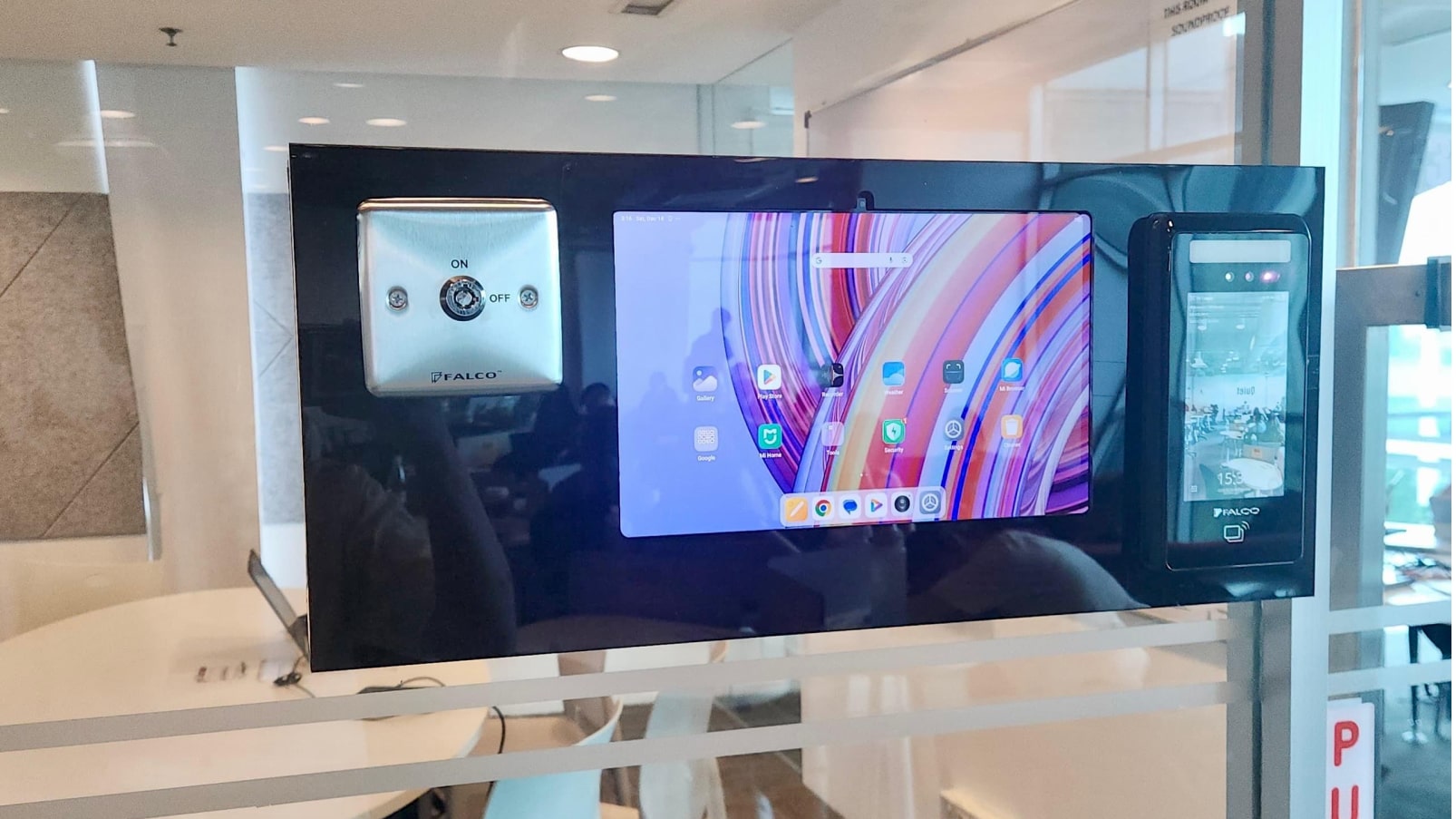
Facial recognition integrated with building access control doesn't just unlock doors — it can also be configured to deny access and simultaneously alert security when a flagged individual attempts entry, turning access control from a passive barrier into an active detection point.
In an emergency scenario, real-time facial recognition data can support faster, more targeted response. If a security event is confirmed in a specific building, integrated systems can help emergency responders understand who is in that building in real time, supporting more informed lockdown or evacuation decisions rather than relying solely on estimated occupancy.
For larger universities running a centralized security operations center, AI-powered facial recognition alerts should feed into the same command center dashboard as access control events, video alerts, and emergency notifications — giving security directors a single, unified operational picture rather than staff monitoring multiple disconnected systems during a live incident.
It's worth being specific about what "AI-powered" means in this context, since the term is often used loosely. Beyond core identity matching, modern systems increasingly apply machine learning to:
These capabilities are what separate a genuinely AI-powered system from a basic facial matching tool bolted onto existing camera infrastructure — and it's a meaningful distinction for administrators evaluating vendors, since not every product marketed as "AI-powered" delivers on all three.
University administrators evaluating AI-powered facial recognition have to weigh its security benefits against legitimate concerns about surveillance scope, particularly on campuses where academic freedom and open inquiry are core institutional values. A few principles help keep the deployment proportionate:
Administrators who build these guardrails into the deployment from the start tend to face less institutional pushback than those who deploy first and address governance concerns reactively.
For campus security directors, the value of AI-powered facial recognition should be measurable, not just assumed. Useful metrics include:
Tracking these metrics gives security directors a defensible basis for expanding the program, adjusting vendor relationships, or justifying continued budget investment to university leadership and boards.
AI-powered facial recognition changes campus security's operating posture from reactive to proactive — from reviewing what happened to detecting and responding to what's happening, in real time, across a coordinated network of cameras and access points. That shift delivers real value, but only when the technology is deployed as one integrated layer within a broader security strategy, governed by clear policy, and measured against concrete outcomes rather than adopted on the assumption that AI alone makes a campus safer. For security directors and administrators building the case for this investment, the strongest argument isn't the technology itself — it's the coordinated, well-governed security ecosystem it enables.
I'm a highly skilled project manager with extensive experience in the education technology industry. With a background in computer science and a passion for improving educational outcomes, I have dedicated my career to developing innovative software solutions that make learning more engaging, accessible, and effective.


-min%2520(1).png)