Discover student orientation insights, tips, and strategies from experts
Guide to effective student orientations
Download the eBook
-cropped.svg)


.svg)
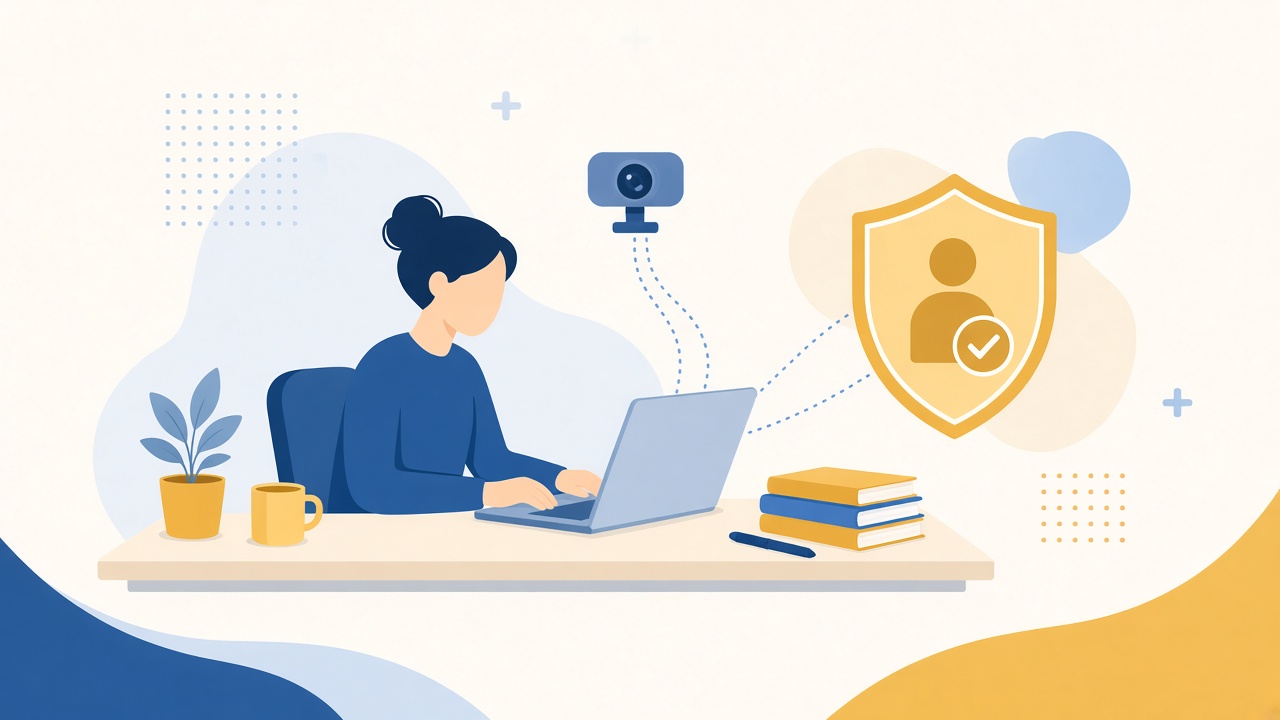
Online tests make school more flexible. They also create a hard question: is the person on camera the student who should be taking the test?
Facial recognition can help confirm identity at the start of an exam and, in some setups, check again during the session. It is not a full honesty system on its own. It is one layer that makes impersonation harder.
This guide is for academic leaders and IT teams planning remote or hybrid exams.
Common issues look like this:
Password logins do not stop those tricks. A face check at the start raises the bar.
A typical flow looks like this:
Schools often combine this with lockdown browsers, random question banks, and human review for flagged sessions. Face matching is the identity step, not the whole exam design.
If the face does not match the enrolled student, the exam should not start. That blocks the most direct form of proxy testing.
Schools get a record of who started the session and when. That helps when grades are challenged.
Students off campus can still prove identity without mailing in extra ID paperwork for every test.
Face matching can fail in poor light, with low quality webcams, or when a student has a major appearance change that was never updated in the system. Build a fair backup path, such as a live staff check, so honest students are not stuck.
It also does not prove a student is not getting help from someone off camera. Other proctoring tools and exam design still matter.
Exam face data is sensitive. Students and parents will ask hard questions. Before you turn anything on:
For a broader campus privacy checklist, use Student Privacy & Data Security in Campus Facial Recognition. Many of those steps apply to online testing too.
Pick a subject that already runs online tests. Compare flag rates, student support tickets, and grade disputes against the old process.
A flag is a clue, not a verdict. Staff should review context before accusing anyone.
Publish a short guide: camera setup, lighting tips, what to do if the match fails, and how to request a backup method.
Tell students the match happens to confirm identity, not to grade their face.
Share a short tech checklist one week before exams: camera on, face lit from the front, browser updated, quiet room.
After the pilot, publish what changed. If false rejects were high, say what you fixed. Silence creates rumors faster than a clear note does.
Facial recognition makes remote exams harder to fake at the door. It works best with fair policies, good support, and other academic integrity tools. Treat identity as one clear step, not a magic fix.
If your campus is already using facial recognition for access or attendance, ask vendors how exam identity can reuse the same secure enrollment process instead of building a second silo.
I'm a highly skilled project manager with extensive experience in the education technology industry. With a background in computer science and a passion for improving educational outcomes, I have dedicated my career to developing innovative software solutions that make learning more engaging, accessible, and effective.