Discover student orientation insights, tips, and strategies from experts
Guide to effective student orientations
Download the eBook
-cropped.svg)


.svg)
Library lines often stall for simple reasons. A student forgot their card. A barcode will not scan. Staff spend time looking up accounts while the queue grows.
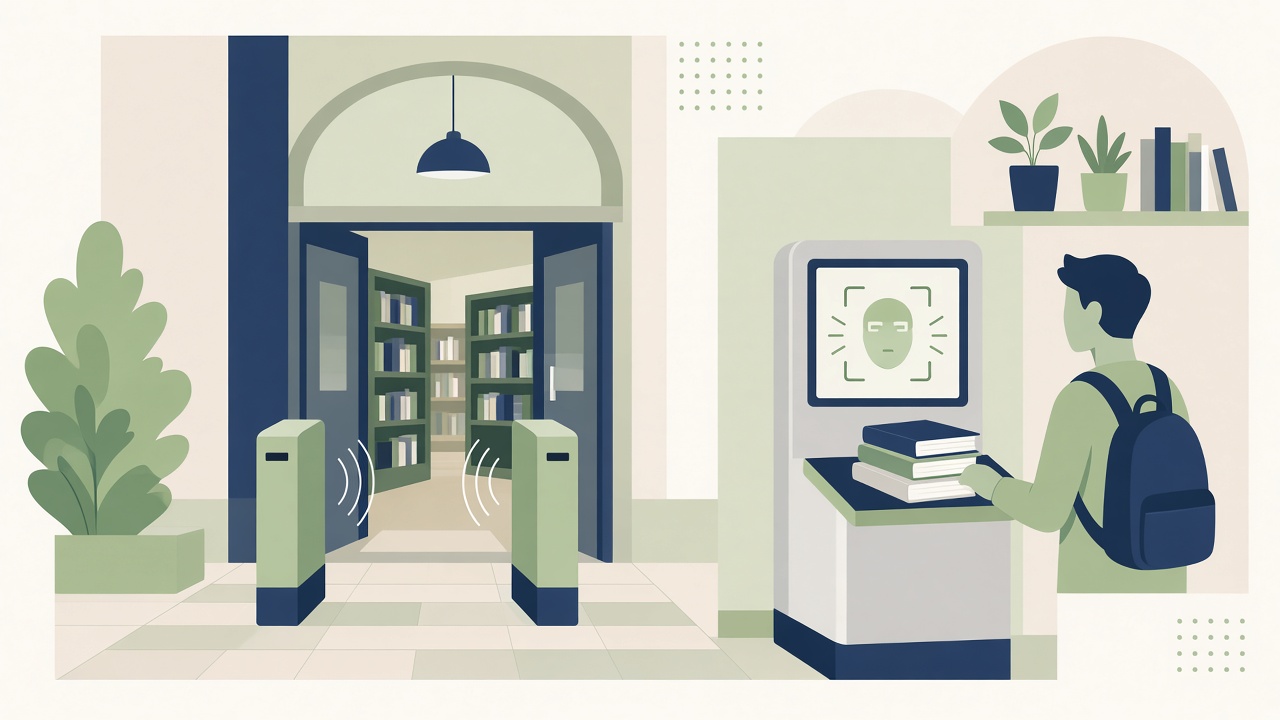
Facial recognition can let an enrolled student enter the library and borrow items after a quick face check. No card hunt. No shared PIN on a public keyboard.
This article is for librarians and campus IT teams who want faster service without losing track of who borrowed what.
Each delay is small. Across a busy term, they add up for both students and staff.
A camera at the gate matches the student to an approved list. The gate opens for enrolled users. Guests can still use a staffed desk or visitor pass.
At self-check or the desk, the same identity can open the student account. Items get linked to the right person without a physical card tap.
Some libraries also use face checks for study rooms or locker walls. The goal is the same: prove who is using a controlled space.
GR Tech has published a related case path on automated borrowing if you want a real-world campus angle. Pair that thinking with your current library management system advantages so the face layer does not float outside your catalog tools.
Students move through with fewer stops. Staff spend less time on account lookups.
Replacement cards cost money and time. Face enrollment does not get left on a bus as often as plastic does.
You get a clearer record of who entered and who borrowed an item. That helps when materials go missing.
With solid enrollment and camera placement, limited late access can run without a full desk shift, as long as safety rules stay in place.
Put clear signs at face-enabled doors. Offer a card or desk option so students are not forced into one path.
Face identity should map to the same borrower ID your library automation stack already uses. If the systems disagree, fines and holds get messy fast.
Libraries have mixed light. Test morning, evening, and window glare. Adjust mounts before you promise a launch date.
Not every visitor is a current student. Keep a simple guest process so community users are not blocked without notice.
Libraries are one service desk among many. Cafeterias and other cashless spots face similar "forgot my card" problems. If you are planning both, read Cashless Campuses: Facial Recognition for Cafeteria Payments and Services so identity rules stay consistent across campus.
Librarians still help with research and collection work. Face check-in should free time at the gate and desk, not replace people skills.
Train student assistants on the override path. Peak hours need a human who can unlock an account in seconds when a match fails.
Keep a weekly review of failed matches. Patterns often point to one dark doorway or one outdated enrollment photo.
Facial recognition will not replace librarians. It can remove card friction so staff focus on people and collections. Keep privacy clear, keep your library system in the loop, and grow from a small pilot.
For product context across campus identity jobs, see GR Tech facial recognition.
I'm a highly skilled project manager with extensive experience in the education technology industry. With a background in computer science and a passion for improving educational outcomes, I have dedicated my career to developing innovative software solutions that make learning more engaging, accessible, and effective.